
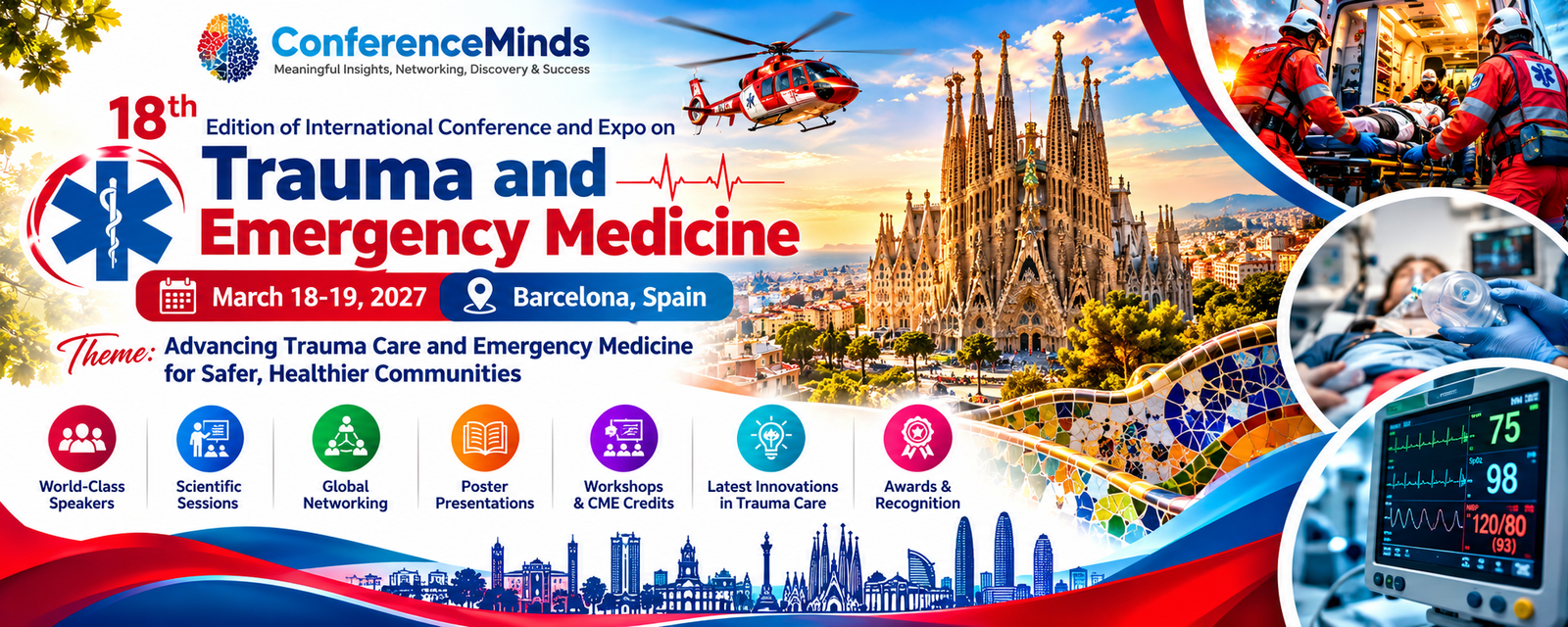
18th Edition of International Conference and Expo
ON
Trauma and Emergency Medicine
Event Date
March 18-19, 2027
Venue
Barcelona, Spain
– Previous Conference Performers / Professionals From Around The Globe –










































Media Partners/Collaborator
A huge thanks to all our amazing partners. We couldn’t have a conference without you!










Sponsors/Exhibitors
A huge thanks to all our amazing partners. We couldn’t have a conference without you!
Trauma Conference 2026
The 18th Edition of the International Conference and Expo on Trauma and Emergency Medicine, scheduled for March 18–19, 2027, in Barcelona, Spain, will bring together trauma surgeons, emergency physicians, critical care specialists, paramedics, and healthcare researchers from around the world.
The conference will focus on advances in trauma management, emergency response, critical care, injury prevention, and innovative approaches to treating life-threatening conditions.
Participants will have the opportunity to present research findings, share clinical experiences, and discuss effective strategies for improving emergency treatment and patient outcomes.
Over the course of two days, attendees will engage in thought-provoking keynote presentations, interactive workshops, and panel discussions focused on trauma care strategies, advanced emergency medical techniques, disaster response, and innovations in pre-hospital care. The event will address both the challenges and opportunities in managing trauma and emergency situations, with a focus on improving patient outcomes, optimizing workflows, and enhancing inter-disciplinary collaboration.
Conference Objectives:
-
Enhance Trauma Care Practices:
Showcase the latest research, clinical advancements, and best practices in trauma care and emergency medicine, aimed at improving treatment outcomes and reducing mortality rates in critical situations. -
Foster Multidisciplinary Collaboration:
Provide a platform for healthcare professionals from diverse fields—trauma surgeons, emergency physicians, paramedics, and nurses—to collaborate, share insights, and strengthen teamwork in emergency settings. -
Promote Technological Advancements:
Highlight new medical technologies, diagnostic tools, and innovations that are transforming trauma and emergency care, such as telemedicine, artificial intelligence in diagnostics, and advanced life support equipment. -
Prepare for Global Emergency Scenarios:
Focus on emergency preparedness, disaster response, and crisis management strategies for large-scale traumatic events, ensuring that healthcare systems are ready to handle mass casualties and extreme conditions.
Conference Benefits:
-
Access to Cutting-Edge Research and Techniques: Attendees will learn about the latest developments in trauma care and emergency medicine, with a focus on improving clinical outcomes in critical care situations.
-
Networking with Global Experts: Connect with renowned trauma and emergency medicine professionals from around the world to exchange ideas, discuss new research, and explore potential collaborations.
-
Hands-On Learning: Participate in practical workshops and live demonstrations of new medical equipment, trauma management protocols, and emergency care procedures that can be directly applied to clinical practice.
-
Focus on Global and Local Emergency Preparedness: Gain insight into the global and regional approaches to managing emergency situations, from large-scale disasters to localized trauma events, and learn how to enhance preparedness in your own healthcare setting.
-
Professional Development and Continuing Education: The conference will provide valuable educational opportunities, including Continuing Medical Education (CME) credits, to help attendees stay at the forefront of trauma care and emergency medicine.
Conference Sessions and Tracks
The conference will feature 15 dynamic sessions, each designed to address critical topics and foster in-depth discussions. Below is an overview of the sessions and their descriptions:
- Advances in Trauma Surgery
- Explore the latest surgical techniques and technologies in trauma surgery. Experts will discuss minimally invasive procedures and the integration of robotics in trauma care.
- Emergency Medicine Innovations
- This session focuses on cutting-edge innovations in emergency medicine, including telemedicine, mobile health apps, and real-time data analytics that improve patient outcomes.
- Pediatric Trauma Management
- A comprehensive look at the unique challenges associated with pediatric trauma. Attendees will learn about tailored assessment protocols and intervention strategies for children.
- Critical Care in Trauma Patients
- Delve into the complexities of critical care management for trauma patients. Topics include fluid resuscitation, ventilation strategies, and monitoring systems.
- Trauma Systems and Policy
- This session discusses the importance of trauma systems and policy in improving care delivery. Experts will highlight successful models and strategies for implementation.
- Neurotrauma: Current Practices and Future Directions
- Examine the latest research in neurotrauma management, including traumatic brain injury protocols and neuroprotective strategies.
- Trauma and Disaster Preparedness
- Focus on preparedness for mass casualty incidents and natural disasters. This session will cover planning, response strategies, and case studies of successful interventions.
- Psychosocial Aspects of Trauma Care
- Understand the psychological impact of trauma on patients and families. This session emphasizes the need for holistic care approaches, including mental health support.
- Rehabilitation Strategies in Trauma
- Explore innovative rehabilitation techniques for trauma patients. Discussion will include the role of physiotherapy, occupational therapy, and technology in recovery.
- Trauma in the Elderly
- Learn about the specific considerations and protocols for managing trauma in elderly patients. Topics will include risk assessment and tailored treatment plans.
- Global Perspectives on Trauma Care
- Engage with international experts as they share insights into trauma care practices from various regions. This session promotes understanding of cultural differences and best practices.
- Legal and Ethical Issues in Trauma Medicine
- A critical discussion on the legal and ethical challenges faced in trauma care, including consent, malpractice, and the rights of patients.
- Trauma Research: Bridging the Gap
- Investigate the latest findings in trauma research and how they translate into clinical practice. This session will highlight collaborative research initiatives.
- Role of Technology in Emergency Medicine
- A comprehensive overview of the role of technology in improving emergency response times and patient care. This includes wearable devices and advanced imaging techniques.
- Future Trends in Trauma Care
- A forward-looking session discussing anticipated trends and innovations in trauma care, emphasizing the role of artificial intelligence and machine learning.
Why Attend?
Attending the 16th International Conference on Trauma and Emergency Medicine offers numerous benefits:
- Networking Opportunities: Connect with industry leaders, researchers, and practitioners from around the globe, facilitating potential collaborations and partnerships.
- Cutting-edge Knowledge: Gain insights into the latest research, technologies, and practices that are shaping the future of trauma care.
- Professional Development: Enhance your skills and knowledge through workshops and interactive sessions led by experts in the field.
- Certification and Credits: Many sessions will offer continuing medical education (CME) credits, contributing to your professional development requirements.
- Global Perspective: Learn about trauma care practices from different countries, enriching your understanding of global health challenges.
The Future of Trauma Care
The future of trauma care is poised for significant advancements driven by technology, research, and evolving patient needs. Key trends include:
- Integration of Artificial Intelligence: AI is becoming increasingly influential in predicting outcomes, optimizing treatment plans, and improving diagnostic accuracy.
- Telemedicine and Remote Monitoring: The expansion of telehealth services is enhancing access to trauma care, particularly in remote areas.
- Personalized Medicine: Advances in genetics and biomarker research are paving the way for personalized treatment approaches tailored to individual patients.
- Focus on Mental Health: There is a growing recognition of the importance of mental health in trauma recovery, leading to integrated care models that address both physical and psychological needs.
- Enhanced Training and Simulation: Innovations in training methodologies, including virtual reality and simulation-based learning, are improving the preparedness of healthcare professionals.
Market Analysis
The trauma care market is experiencing substantial growth, driven by increasing incidences of traumatic injuries, advances in medical technology, and a rising emphasis on patient-centered care. Key factors influencing the market include:
- Increasing Accident Rates: Road traffic accidents, falls, and sports injuries contribute to a growing demand for effective trauma management.
- Technological Advancements: Innovations in medical devices, telemedicine, and emergency response technologies are enhancing trauma care delivery.
- Aging Population: An increase in the elderly population necessitates specialized trauma care services tailored to their unique needs.
- Rising Healthcare Expenditure: Governments and private sectors are investing heavily in healthcare infrastructure, leading to improved trauma care facilities and services.
- Global Health Initiatives: Initiatives aimed at improving trauma care in low- and middle-income countries are expanding access and quality of services.
About the Venue
London is a vibrant and historic metropolis that seamlessly blends centuries-old heritage with cutting-edge modernity, making it one of the most influential cities in the world. Situated along the banks of the River Thames, London has been a major settlement for over two millennia, evolving from a Roman outpost into a global center of finance, culture, politics, and innovation. The city is home to iconic landmarks such as Big Ben, Tower Bridge, and Buckingham Palace, each reflecting its rich architectural and historical legacy. London’s cultural diversity is one of its defining characteristics, with people from all over the world contributing to its dynamic atmosphere, which is evident in its cuisine, festivals, languages, and everyday life. The city is also a hub for arts and education, hosting renowned institutions like the British Museum and the University of London, which attract millions of visitors and students annually. The West End, often compared to New York’s Broadway, is famous for its world-class theatre productions, while neighborhoods such as Camden, Soho, and Shoreditch offer unique experiences ranging from alternative culture to vibrant nightlife. London’s green spaces, including Hyde Park and Regent’s Park, provide a refreshing contrast to its bustling urban environment, offering residents and tourists alike a place to relax and unwind. As a leading global financial center, the city hosts the London Stock Exchange, influencing international markets and economies. Public transportation, particularly the iconic London Underground, makes navigating the sprawling city efficient and accessible. Despite its modern advancements, London retains a deep respect for tradition, with ceremonies such as the Changing of the Guard drawing visitors from around the globe. The city’s ability to preserve its past while embracing the future is what makes it truly exceptional. Whether it’s exploring historic castles, enjoying world-class dining, attending international events, or simply walking along the Thames at sunset, London offers an unforgettable experience that captures the essence of both heritage and progress in a way few cities can match.
– Tracks & Key Topics –
- Critical Care in Trauma
- Intensive Care in Trauma
- Obstetric Trauma
- Psychological Trauma
- Blunt Trauma
- Elderly Trauma and Critical Care
- Paediatric Trauma
- Trauma Emergency Medicine
- Trauma in Nursing & Midwifery
- Biological Need of Trauma
- Trauma & Critical Care Nursing
- Trauma Therapy
- Delirium in Critical Care
- Evolution in Emergency Medicine Practices
- Trauma-Mass Casualties Incidents
- New Technology in Trauma
- Trauma-An International Perspective
- Trauma
- Critical Care
- Trauma Care
- Pediatric Trauma
- Trauma in Critical Care Nursing
- New Technology in Trauma
- Emergency Medicine
- Trauma in Nursing And Midwifery
- Biological Need of Trauma
- Intensive Care in Trauma
- Emotional & Physiological Trauma
- Delirium in Critical Care
- Evolution in Emergency Practises
- Trauma Diagnosis
- Trauma & Reconstructive Surgery
- Obstetric Trauma
- Urological Trauma
- Sexual Trauma
- Post-Traumatic Stress Disorder
- Orthopaedic Trauma