
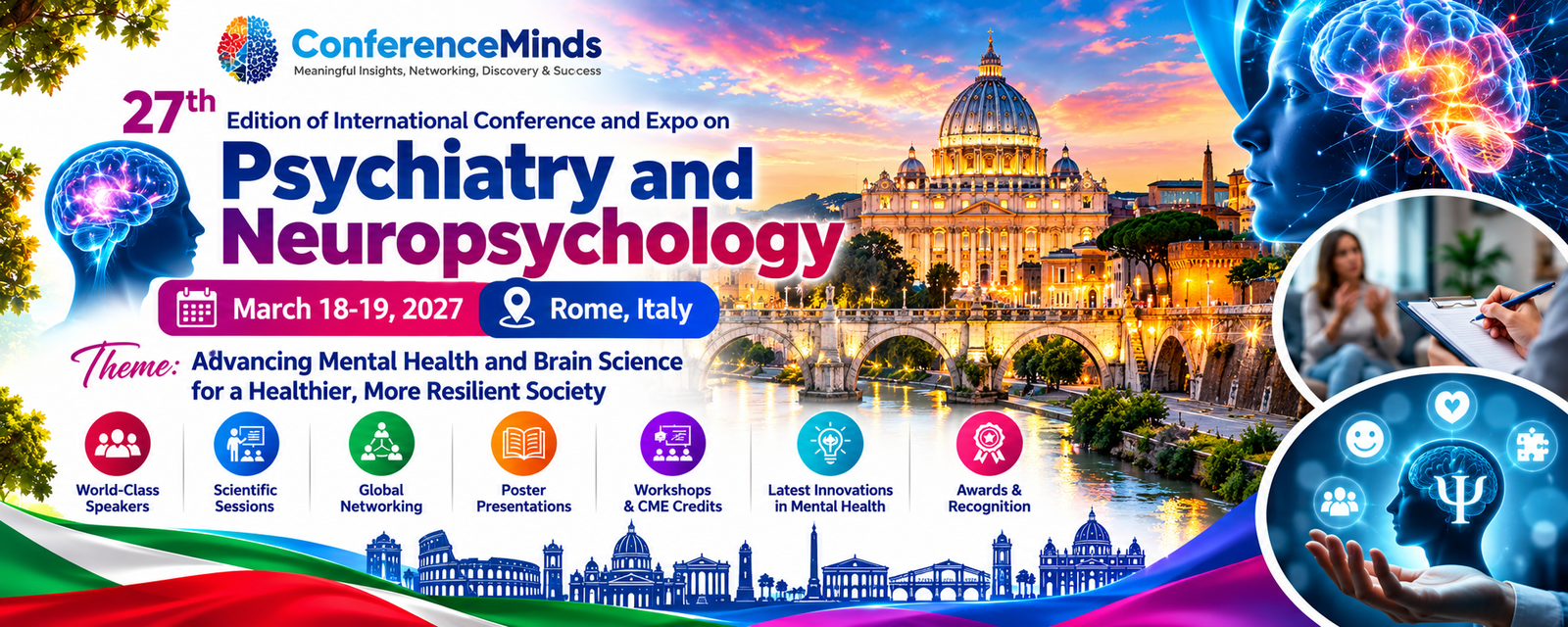
27th Edition of International Conference and Expo
ON
Psychiatry and Neuropsychology
Event Date
March 18-19, 2027
Venue
Rome, Italy
– Previous Conference Performers / Professionals From Around The Globe –










































Media Partners/Collaborator
A huge thanks to all our amazing partners. We couldn’t have a conference without you!










Sponsors/Exhibitors
A huge thanks to all our amazing partners. We couldn’t have a conference without you!
About Conference
The 27th Edition of the International Conference and Expo on Psychiatry and Neuropsychology, scheduled for March 18–19, 2027, in Rome, Italy, will bring together psychiatrists, neuropsychologists, mental health professionals, researchers, and academicians from around the world.
The conference will explore recent advances in psychiatric disorders, cognitive neuroscience, neuropsychological assessment, behavioral health, and innovative mental health treatment approaches.
Participants will have the opportunity to present research findings, exchange clinical experiences, and discuss emerging strategies for improving mental health care and patient well-being.
Over two days, the conference will feature in-depth discussions, keynote speeches, and interactive workshops focused on mental health disorders, the impact of neuroplasticity, advances in brain imaging techniques, and cutting-edge neuropsychological assessments. The event will also explore emerging therapies, including pharmacological treatments, neurostimulation techniques, and integrative approaches to mental health.
This conference offers a unique opportunity to engage with global leaders in psychiatry and neuropsychology, network with peers, and explore innovative solutions to mental health challenges, all while fostering international collaboration in both research and clinical practice.
Conference Objectives
-
Explore Advances in Psychiatric and Neuropsychological Research:
Discuss the latest research on mental health disorders, cognitive function, and brain-behavior relationships. -
Foster Collaboration Across Disciplines:
Promote collaboration between psychiatry, neuropsychology, neuroscience, and clinical psychology to improve mental health care and outcomes. -
Showcase Emerging Therapies and Technologies:
Highlight advancements in pharmacology, neurostimulation, and digital mental health technologies that are reshaping treatment paradigms. -
Address Global Mental Health Challenges:
Focus on strategies for addressing the global mental health crisis, including new approaches to early intervention, prevention, and personalized treatment.
Conference Benefits
-
Access to Cutting-Edge Research: Stay informed on the latest developments in mental health treatment, neuroscience, and neuropsychological diagnostics.
-
Networking Opportunities: Connect with thought leaders, clinicians, and researchers from around the world to exchange ideas and form collaborations.
-
Hands-On Workshops: Gain practical experience in innovative techniques for diagnosing and treating psychiatric and neuropsychological conditions.
-
Insight into Future Trends: Learn about emerging trends in mental health treatment, including digital health tools, psychotherapies, and pharmacological advancements.
Sessions and Tracks
-
Advancements in Neuroimaging Techniques for Mental Health
Exploring cutting-edge imaging tools to understand brain activity in psychiatric disorders, paving the way for new treatments. -
Psychopharmacology and Personalized Medicine
Examining the latest research in psychopharmacology and how personalized medicine is revolutionizing treatment protocols. -
The Impact of Genetics on Mental Health Disorders
A deep dive into the role of genetic factors in the development of psychiatric disorders and the potential for gene-based therapies. -
Early Detection and Intervention in Psychosis
Focusing on the importance of early diagnosis in conditions like schizophrenia and how interventions can improve long-term outcomes. -
Cognitive Behavioral Therapy (CBT) Innovations
Analyzing the evolving role of CBT in treating anxiety, depression, and other mood disorders, with a focus on new techniques and digital CBT tools. -
The Role of Artificial Intelligence in Psychiatry
Exploring the use of AI to enhance diagnostics, treatment planning, and patient outcomes in mental health. -
Trauma-Informed Care: Best Practices
Understanding trauma’s impact on mental health and how to implement trauma-informed care in clinical settings. -
Mental Health and the Aging Population
Addressing the challenges of diagnosing and treating mental health disorders in the elderly, including dementia and depression. -
Psychiatric Epidemiology in Europe: Trends and Data
Reviewing the latest epidemiological studies on mental health in Europe and identifying trends and risk factors. -
Integrative Approaches to Psychiatric Care
Discussing holistic, integrated care models that combine traditional psychiatry with complementary therapies for improved patient outcomes. -
Post-Traumatic Stress Disorder (PTSD) and Treatment Innovations
Exploring the latest evidence on PTSD treatment, including novel pharmacological and psychotherapeutic interventions. -
The Intersection of Mental Health and Substance Use Disorders
Examining the dual diagnosis of mental health and substance abuse disorders, and the integrated care models to treat both. -
Youth Mental Health: Prevention and Intervention
Strategies for addressing mental health in children and adolescents, focusing on early prevention and intervention. -
Mental Health in Refugees and Migrants
Understanding the unique challenges faced by refugees and migrants, and how to provide culturally competent mental health services. -
Social Determinants of Mental Health
Discussing the impact of socio-economic factors such as poverty, education, and housing on mental health. -
Digital Health Tools for Mental Health Care
Exploring the use of digital tools like telemedicine, apps, and online platforms for mental health care delivery. -
Neurodevelopmental Disorders: Advances in Treatment
Focusing on autism spectrum disorder (ASD), ADHD, and other neurodevelopmental disorders, and the latest therapeutic advancements. -
Mental Health Policy and Advocacy
Exploring the role of mental health policy in shaping care systems and advocating for change at the governmental level. -
Mindfulness and Mental Health
Examining how mindfulness techniques can be used to treat anxiety, depression, and stress-related disorders. -
Psychiatric Ethics and Human Rights
Discussing the ethical considerations of psychiatric treatment, particularly in relation to patient rights and involuntary treatment. -
Mental Health and the Workplace
Addressing mental health challenges in the workplace, with a focus on creating supportive environments for employees. -
Suicide Prevention: Strategies and Initiatives
Sharing best practices for suicide prevention, from early intervention to community-based programs. -
Psychiatric Disorders in Women: Unique Challenges
Analyzing gender-specific issues in mental health, including the impact of hormonal changes and gender-based violence. -
Pharmacogenomics in Psychiatry
The role of pharmacogenomics in understanding individual responses to psychiatric medications and optimizing treatment. -
The Future of Psychiatric Research: Trends and Directions
A forward-looking session discussing emerging research areas and the future trajectory of psychiatric and mental health research.
Market Analysis
The mental health market is undergoing a significant transformation driven by increasing demand for psychiatric services, rising awareness of mental health issues, and rapid advancements in research and technology. According to industry reports, the global mental health market is expected to grow substantially, with a projected compound annual growth rate (CAGR) of 3.5% over the next five years.
A major factor influencing this growth is the increasing prevalence of mental health disorders worldwide. Mental health conditions such as depression, anxiety, and PTSD are on the rise, with one in four people globally affected by some form of mental illness at some point in their lives. This trend is particularly pronounced in high-income countries, where societal changes, stress, and lifestyle factors contribute to an increasing burden of mental health issues.
The adoption of digital health tools is also contributing to the market expansion. Telemedicine, mental health apps, and online therapy platforms are becoming more integrated into mental health care delivery systems. The COVID-19 pandemic accelerated the use of digital health tools, and many providers have found virtual care to be an effective alternative, particularly in areas with limited access to in-person services. Digital therapeutics, artificial intelligence (AI), and virtual reality (VR) applications are increasingly being used for diagnostics, therapy, and patient monitoring, creating new opportunities for innovation in the field.
Additionally, the growing recognition of mental health as a critical component of overall well-being is influencing policy changes globally. Many governments are increasing their investment in mental health care, recognizing its significant impact on social and economic outcomes. This includes improving access to psychiatric services, enhancing public awareness campaigns, and investing in research to develop new treatment modalities.
The mental health workforce is also evolving, with increasing emphasis on integrated care models that combine traditional psychiatry with other healthcare disciplines such as social work, nursing, and therapy. The integration of mental health services into primary care settings is expanding access to treatment and reducing stigma associated with seeking help.
Another trend shaping the market is the growing interest in precision psychiatry. With advancements in genomics, neuroimaging, and pharmacogenomics, mental health professionals are beginning to develop more personalized treatment plans tailored to individual patients’ unique biological, genetic, and environmental profiles.
In summary, the psychiatry and mental health market is witnessing dynamic growth fueled by increasing demand, technological advancements, and evolving healthcare policies. As mental health becomes a more prominent priority in both public and private sectors, opportunities for innovation, investment, and improved patient outcomes continue to expand.
About Venue
Barcelona, Spain – A Vibrant Destination of Culture, Architecture, and Mediterranean Beauty
Barcelona, the capital of Catalonia in northeastern Spain, is one of Europe’s most beautiful and captivating cities, renowned for its extraordinary architecture, rich cultural heritage, Mediterranean coastline, and lively atmosphere. Situated along the northeastern coast of the Iberian Peninsula, Barcelona offers a remarkable blend of historic charm, modern sophistication, and natural beauty, making it a popular destination for international tourists, business travelers, researchers, and conference delegates. The city is particularly famous for the architectural masterpieces of Antoni Gaudí, whose creative vision has shaped Barcelona’s distinctive identity. Among its most celebrated landmarks is the magnificent Sagrada Família, an extraordinary basilica that stands as a symbol of the city and continues to attract visitors from around the world. Other architectural treasures include Park Güell, Casa Batlló, and Casa Milà, each showcasing the artistic imagination and innovative designs that make Barcelona unique. Visitors can explore the historic Gothic Quarter, where narrow medieval streets, charming squares, ancient buildings, and traditional cafés create an enchanting atmosphere. La Rambla, one of the city’s most famous boulevards, offers a lively experience with shops, restaurants, street performers, and local markets, including the popular La Boqueria Market. Barcelona is also celebrated for its beautiful beaches, particularly Barceloneta Beach, where visitors can relax beside the Mediterranean Sea, enjoy water activities, or experience the city’s vibrant coastal lifestyle. Food lovers can discover authentic Spanish and Catalan cuisine, including tapas, paella, fresh seafood, traditional pastries, and a variety of regional specialties. The city also boasts an exciting cultural scene, with world-class museums, art galleries, music festivals, theatres, and sporting attractions, including the internationally renowned football culture associated with FC Barcelona. Beyond tourism, Barcelona is an important European centre for education, scientific research, healthcare, technology, innovation, and international business. Its modern convention centres, excellent transport connections, diverse accommodation options, and extensive hospitality facilities make it an attractive location for international conferences, exhibitions, academic meetings, and professional networking events. The city’s international airport connects Barcelona with numerous destinations across Europe and beyond, while its efficient public transportation system makes sightseeing convenient for visitors. Spring and autumn are particularly appealing seasons for exploring the city, with generally pleasant temperatures and opportunities to enjoy outdoor attractions. Whether discovering architectural wonders, enjoying Mediterranean cuisine, strolling through historic neighbourhoods, or participating in international professional gatherings, Barcelona offers an enriching experience that combines knowledge, culture, relaxation, and discovery. With its welcoming atmosphere, artistic spirit, and cosmopolitan character, Barcelona remains an unforgettable destination for travellers seeking both professional opportunities and memorable cultural experiences in Spain.