
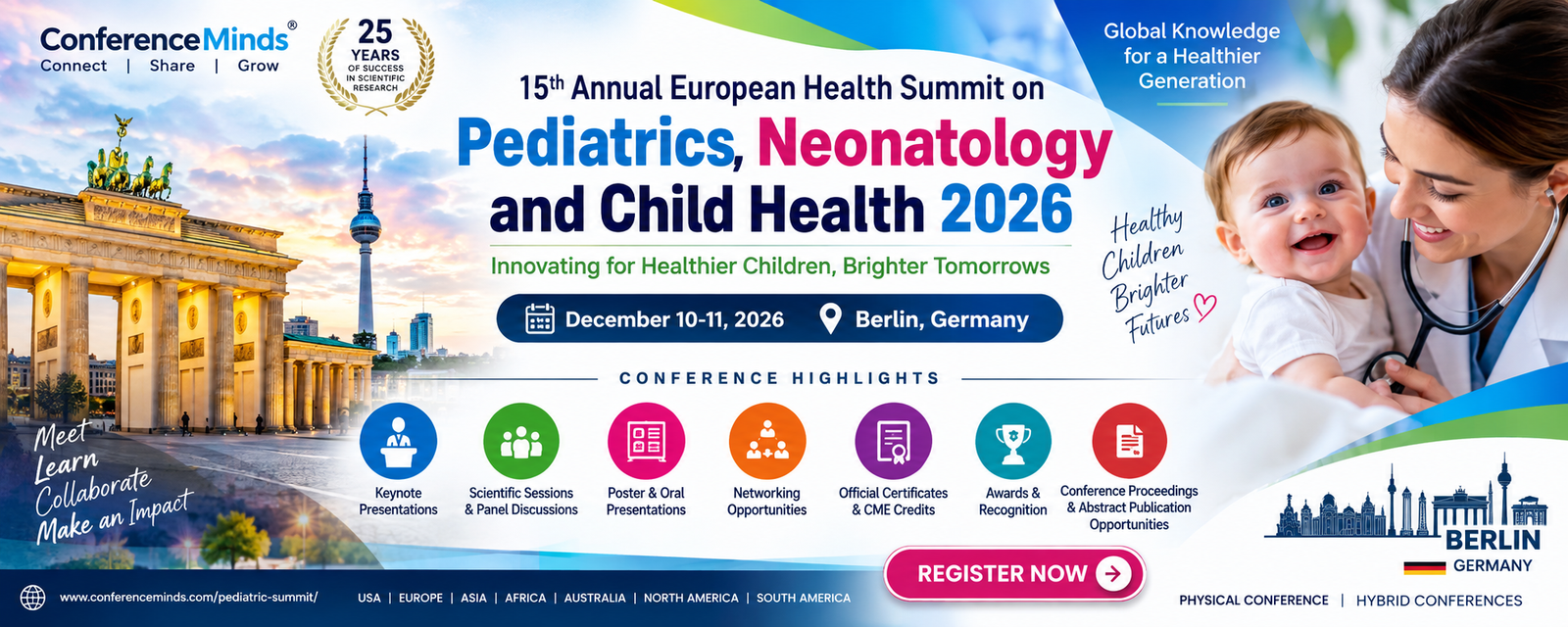
15th Annual European Health Summit
ON
Pediatrics, Neonatology and Child Health 2026
Event Date
December 10-11, 2026
Venue
Berlin, Germany
– Previous Conference Performers / Professionals From Around The Globe –










































Media Partners/Collaborator
A huge thanks to all our amazing partners. We couldn’t have a conference without you!










Sponsors/Exhibitors
A huge thanks to all our amazing partners. We couldn’t have a conference without you!
About the Conference
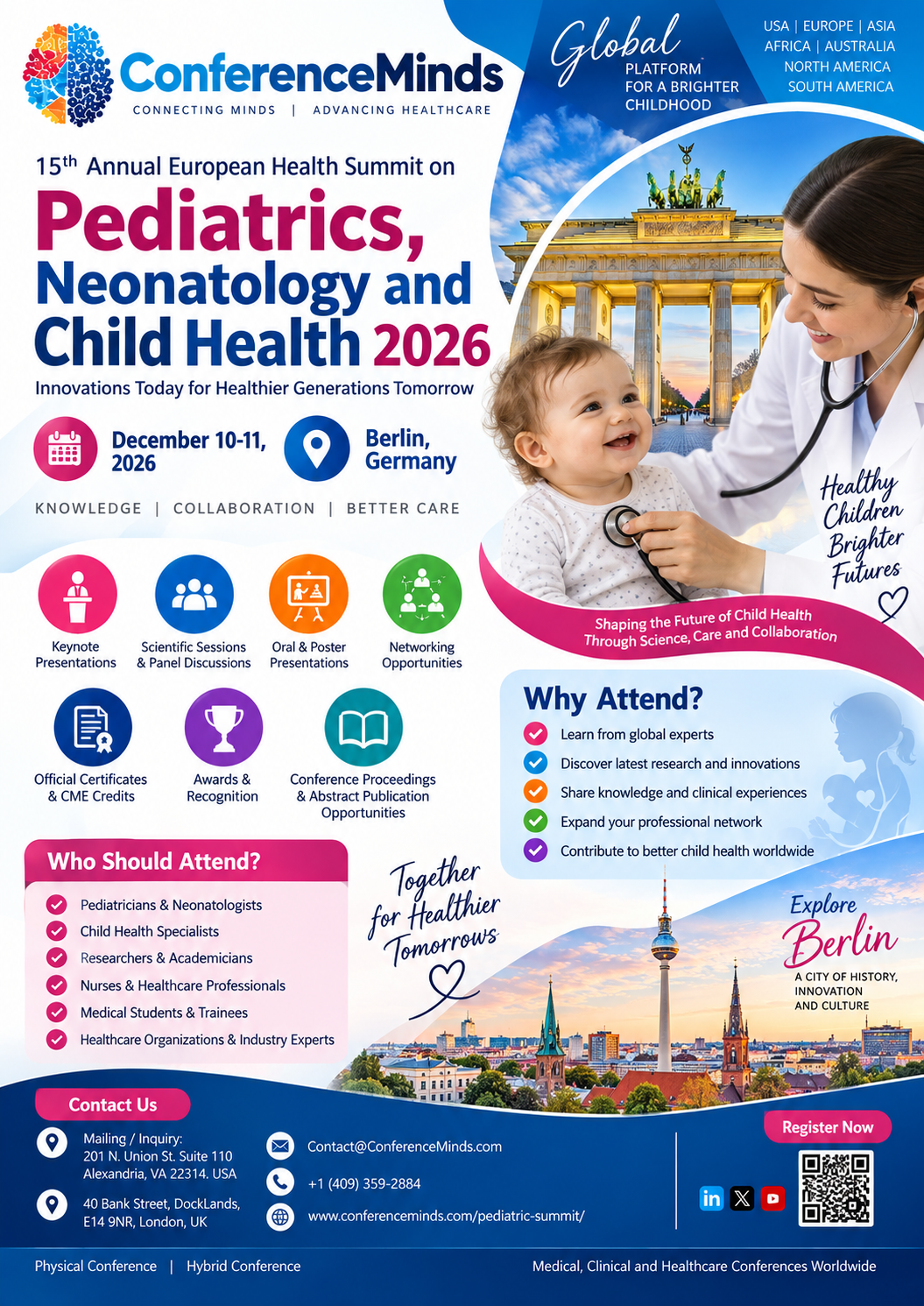
The 15th Annual European Health Summit on Pediatrics, Neonatology and Child Health 2026 will bring together pediatricians, neonatologists, child-health specialists, nurses, researchers, healthcare professionals, academics and industry experts to discuss advances in the prevention, diagnosis and management of diseases affecting newborns, infants, children and adolescents.
The summit will provide an international platform for sharing clinical experiences, scientific discoveries, innovative treatment approaches and emerging technologies in pediatric and neonatal medicine. Key discussions will address neonatal intensive care, prematurity, pediatric emergencies, infectious diseases, pediatric cardiology, neurology, nutrition, developmental disorders, child mental health and preventive healthcare.
Berlin provides a strong scientific environment for the meeting, with established pediatric and neonatal services and major academic healthcare institutions. Current Berlin health reporting includes dedicated data on the health of children and adolescents, while hospitals and specialist centers continue to support multidisciplinary pediatric and neonatal care.
The conference will feature keynote lectures, invited talks, oral presentations, poster sessions, interactive discussions and networking opportunities. It aims to encourage international collaboration and promote evidence-based approaches that can improve outcomes for children and newborns worldwide.
Sessions & Tracks
1. Advances in General Pediatrics
Discussion of contemporary approaches to diagnosis, treatment and long-term management of common and complex pediatric conditions.
2. Neonatology & Neonatal Intensive Care
Latest developments in the care of critically ill newborns, including respiratory support, monitoring, nutrition and intensive care strategies.
3. Prematurity & Low Birth Weight
Clinical management of premature and very-low-birth-weight infants, including complications, developmental follow-up and multidisciplinary care.
4. Perinatal Medicine & High-Risk Pregnancy
Integration of prenatal, obstetric and neonatal care for pregnancies and newborns at increased medical risk.
5. Pediatric Emergency & Critical Care
Recognition and management of pediatric emergencies, shock, respiratory failure, sepsis, trauma and other life-threatening conditions.
6. Pediatric Cardiology
Congenital and acquired heart disease in children, advances in diagnosis, intervention and long-term pediatric cardiac care.
7. Pediatric Neurology
Emerging approaches to epilepsy, developmental neurological disorders, neuromuscular diseases and childhood neurodevelopment.
8. Pediatric Infectious Diseases
Current approaches to childhood infections, antimicrobial treatment, vaccination, emerging pathogens and infection prevention.
9. Pediatric Respiratory Medicine
Asthma, bronchiolitis, pneumonia, chronic respiratory disorders and advances in pediatric pulmonary diagnostics and treatment.
10. Pediatric Gastroenterology & Hepatology
Innovations in the management of gastrointestinal, liver and nutritional disorders affecting children.
11. Pediatric Endocrinology & Diabetes
Childhood diabetes, growth disorders, obesity, thyroid disease, puberty disorders and emerging endocrine therapies.
12. Pediatric Hematology & Oncology
Contemporary diagnosis and treatment of childhood cancers, hematological disorders, survivorship and supportive care.
13. Pediatric Nutrition & Metabolic Health
Infant nutrition, breastfeeding, micronutrients, metabolic disorders and strategies for healthy childhood development.
14. Child Growth & Development
Assessment of physical, cognitive, behavioral and developmental milestones and early identification of developmental concerns.
15. Pediatric Immunology & Allergy
Allergic diseases, immune deficiencies, autoimmune conditions and advances in immunological diagnosis and treatment.
16. Pediatric Nephrology
Childhood kidney disease, congenital renal disorders, hypertension, nephrotic syndrome and pediatric renal replacement therapies.
17. Pediatric Surgery
Advances in minimally invasive procedures, neonatal surgery, congenital anomalies and multidisciplinary surgical care.
18. Child & Adolescent Mental Health
Depression, anxiety, behavioral disorders, neurodevelopmental conditions and integrated approaches to child and adolescent mental health.
19. Pediatric Genetics & Genomic Medicine
Genetic diagnosis, genomic sequencing, rare diseases, personalized medicine and the growing role of precision pediatrics.
20. Vaccines & Preventive Child Health
Immunization strategies, preventive medicine, health screening and public-health interventions for children.
21. Digital Pediatrics & Artificial Intelligence
Applications of artificial intelligence, digital health, telemedicine, predictive analytics and clinical decision-support systems in pediatric care.
22. Pediatric Pharmacology & Drug Development
Safe medication use in children, pharmacokinetics, pediatric clinical trials and development of age-appropriate therapies.
23. Neonatal Nursing & Family-Centered Care
Advances in neonatal nursing, developmental care, parental involvement, psychosocial support and family-centered clinical practice.
24. Global Child Health
Child-health challenges across different regions, health inequalities, infectious diseases, maternal-child health and international collaboration.
25. Future of Pediatrics & Precision Child Health
Emerging technologies, personalized medicine, genomics, AI and multidisciplinary models shaping the future of pediatric healthcare.
Market Analysis
The pediatric and neonatal healthcare sector is being shaped by advances in diagnostics, intensive care, genomics, digital health and preventive medicine. Increasing attention to early diagnosis and intervention is creating demand for specialized pediatric services, advanced neonatal technologies and multidisciplinary models of care.
Europe represents an important environment for pediatric research and healthcare innovation because of its established hospital infrastructure, academic medical centers and collaborative research networks. Germany, in particular, has a substantial healthcare workforce and extensive hospital infrastructure. In Berlin, approximately 272,000 people were employed in the healthcare sector at the end of 2024, while hospitals remained the largest healthcare employers.
Berlin also provides a relevant clinical ecosystem for pediatrics and neonatology. Specialist institutions provide neonatal intensive care, including services for premature and critically ill newborns. For example, DRK Kliniken Berlin Westend operates a Level-2 perinatal center providing care for sick and premature newborns.
The pediatric market is simultaneously experiencing important demographic and public-health changes. Berlin recorded 33,230 births in 2025, with births declining for the fourth consecutive year. Such demographic trends can influence healthcare planning while increasing the importance of efficient, specialized and preventive child-health services.
Technology is another major market driver. AI-assisted diagnostics, remote monitoring, telemedicine, genomic testing, precision medicine and digital patient-management systems are creating new opportunities for pediatric healthcare providers and technology developers.
The conference therefore provides a timely forum for researchers, clinicians, hospitals, technology companies and healthcare organizations to exchange knowledge and explore emerging opportunities. Its focus on neonatology, pediatric subspecialties, preventive medicine and digital innovation reflects several of the major areas currently shaping the future of child healthcare.
Venue
Berlin, the capital of Germany, is a vibrant international city known for its rich history, cultural diversity, scientific excellence, and modern innovation. As one of Europe’s most influential cities, Berlin offers an ideal setting for international conferences, academic meetings, healthcare summits, and professional networking events.
The city combines historic landmarks with contemporary architecture, world-class research institutions, universities, hospitals, museums, and technology companies. Visitors can explore iconic attractions such as the Brandenburg Gate, Reichstag Building, Museum Island, Berlin Cathedral, and the Berlin Wall Memorial. Berlin’s diverse culinary scene, lively neighborhoods, parks, and cultural events also provide an enjoyable experience beyond conference activities.
Berlin is well connected to major European and international destinations through Berlin Brandenburg Airport and an extensive public transportation network of trains, trams, buses, and underground services. Its efficient infrastructure makes it convenient for delegates traveling from different countries.
For healthcare and scientific professionals, Berlin provides opportunities to connect with researchers, clinicians, academics, industry experts, and institutions from Germany and around the world. The city’s international atmosphere and strong academic and research environment make it a suitable destination for knowledge exchange, collaboration, and professional networking.
With its combination of history, innovation, culture, research, and international connectivity, Berlin offers conference participants both a productive professional environment and an enriching European travel experience.
– Tracks & Key Topics –
- Pediatrics Conference
- Pediatric Conference 2026
- Neonatology Conference
- Neonatology Conference 2026
- Child Health Conference
- Pediatric Healthcare
- Pediatric Medicine
- Neonatal Medicine
- Child Healthcare
- Pediatric Research
- Pediatric Care
- Neonatal Care
- Newborn Care
- Infant Health
- Child Development
- Pediatric Surgery
- Pediatric Cardiology
- Pediatric Neurology
- Pediatric Oncology
- Pediatric Hematology
- Pediatric Endocrinology
- Pediatric Gastroenterology
- Pediatric Nephrology
- Pediatric Pulmonology
- Pediatric Infectious Diseases
- Pediatric Immunology
- Pediatric Allergy
- Pediatric Nutrition
- Pediatric Emergency Medicine
- Pediatric Critical Care
- Neonatal Intensive Care
- NICU
- Premature Babies
- Prematurity Care
- Preterm Infants
- Low Birth Weight
- High Risk Newborns
- Perinatal Medicine
- Maternal Child Health
- Newborn Screening
- Infant Nutrition
- Breastfeeding
- Childhood Nutrition
- Child Growth
- Child Development Disorders
- Developmental Pediatrics
- Adolescent Health
- Adolescent Medicine
- Child Mental Health
- Pediatric Psychology
- Pediatric Psychiatry
- Autism Spectrum Disorders
- ADHD in Children
- Childhood Obesity
- Pediatric Diabetes
- Childhood Asthma
- Pediatric Respiratory Health
- Childhood Infections
- Pediatric Vaccination
- Childhood Immunization
- Pediatric Preventive Medicine
- Pediatric Genetics
- Genomic Pediatrics
- Rare Diseases in Children
- Precision Pediatrics
- Personalized Pediatric Medicine
- Pediatric Pharmacology
- Pediatric Clinical Trials
- Pediatric Diagnostics
- Pediatric Imaging
- Pediatric Artificial Intelligence
- AI in Pediatrics
- Digital Pediatrics
- Pediatric Telemedicine
- Digital Child Health
- Pediatric Innovation
- Pediatric Medical Technology
- Neonatal Technology
- Neonatal Research
- Pediatric Clinical Research
- Child Health Research
- Global Child Health
- European Pediatrics
- European Neonatology
- European Child Health Summit
- International Pediatrics Conference
- International Neonatology Conference
- Pediatric Medical Summit
- European Health Summit
- Pediatric Experts
- Pediatricians
- Neonatologists
- Pediatric Nurses
- Child Health Professionals
- Pediatric Researchers
- Pediatric Healthcare Innovation
- Advances in Pediatrics
- Advances in Neonatology
- Future of Child Healthcare
- Pediatrics Neonatology and Child Health 2026