
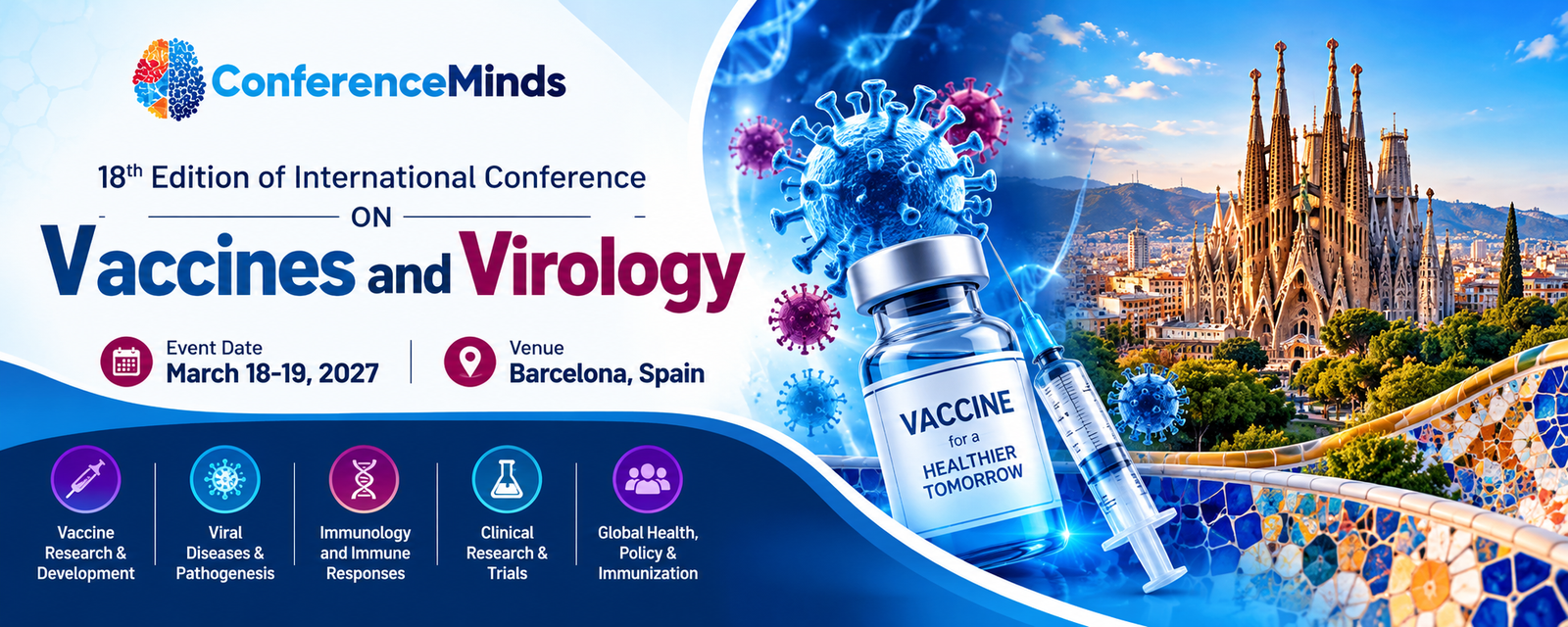
18th Edition of International Conference
ON
Vaccines and Virology
Event Date
March 18-19, 2027
Venue
Barcelona, Spain
– Previous Conference Performers / Professionals From Around The Globe –

Ahmed Ali
- Diyala University, Iraq

Aikaterini Ziaka
- Physio4you, Greece

AMR Hawal
- Professor, Prime Healthcare Group UAE

Antonio Steardo
- University of Salerno, Italy

Ashraf Lotfy Fayed
- ENT Military Hospital, Egypt

Aspazija Sofijanova
- Director of Pediatric Clinic, Macedonia

Brandon P. Lucke-Wold
- University of Florida, Florida

Brankica Vasiljevic
- NMC Royal Hospital, UAE

Bruce Ogden
- Director of Operations US Foods USA

Cornelia Beyer
- University of Hull, UK

Gabriela Barsov
- Macedonia

Grazzia Rey
- University of the Republic, Uruguay

Hadi Salloum
- UAE

Heather Carmello
- University of Rochester, USA

Howard Weber
- Penn State Hershey Childrens Hospital, USA

Ilknur AydınAvci
- Turkey

Irene Hamrick
- University of Cincinnati, USA

Jacek Ciesielski
- Medical University of Lodz, Poland

José De Jesús Curiel Valdés
- Clínical Patology, Mexico

Lloyd L. Tran
- Biomed Industries, USA

Luca Roncati
- University Hospital of Modena, Italy

Mahmoud Al Cheikh Ahmad
- UAE

Maria Braoudaki
- University of Hertfordshire , United Kingdom

Marina F Gubkina
- National Research Medical University, Russia

Muhamad Akhal
- UAE

Nakawesi Aidah
- Uganda

Peter Krcho
- Pavol Jozef safarik University, Slovakia

Pinghong Zhou
- Fudan University, China

Prof. Dr. Ahmed G. Hegazi
- National Research Center, Egypt

Raffaele Pilla
- University of Salerno, Italy

Ruut Veenhoven
- Seres Therapeutics, United States

Said Moustafa M. El-deib
- Yas Clinic Khalifa City UAE

Sajidxa Marino
- Central University of Venezuela, Venezuela

Sajidxa Marino
- Central University of Venezuela, Venezuela

Sam Vaknin
- Southern Federal University, Russia

Simon Treissman
- Royal Inland Hospital, Canada

Taylor Bean
- Salmon Arm, Canada

Thiago Hoesker
- Neuro surgeon , Brazil

Tracy Roake
- Danat Al Emarat Hospital, UAE

Vladimir Zajac
- Cancer Research Institute, Slovakia

William J Rowe
- Specialist in Medicine, USA

Yu You Liu
- National Chung Hsing University, Taiwan
Media Partners/Collaborator
A huge thanks to all our amazing partners. We couldn’t have a conference without you!










Sponsors/Exhibitors
A huge thanks to all our amazing partners. We couldn’t have a conference without you!


About the Conference
The 18th Edition of the International Conference on Vaccines and Virology will be held on March 18–19, 2027, in Barcelona, Spain. This international scientific gathering aims to bring together virologists, vaccinologists, immunologists, microbiologists, infectious disease specialists, healthcare professionals, researchers, academicians, pharmaceutical industry representatives, and biotechnology experts to exchange knowledge and explore advances in vaccines and viral disease research.
The conference will provide a platform to discuss emerging viral infections, vaccine development, immunization strategies, antiviral therapies, molecular virology, viral genomics, and innovative approaches to disease prevention and control. Particular emphasis will be placed on scientific discoveries, translational research, clinical studies, vaccine safety, and the development of effective strategies to address existing and emerging infectious disease challenges.
Through keynote presentations, plenary lectures, scientific sessions, research presentations, and professional discussions, participants will have opportunities to share their findings, learn about evolving technologies, and establish collaborations with colleagues from different countries and scientific disciplines.
The meeting will also encourage discussions on global immunization programs, pandemic preparedness, vaccine accessibility, and the role of scientific innovation in strengthening public health systems.
By connecting experts across academia, healthcare, industry, and research, the conference seeks to promote scientific exchange, support collaborative research, and contribute to the continued advancement of vaccines and virology.
Conference Benefits
Participating in the 18th Edition of the International Conference on Vaccines and Virology 2027 offers an opportunity to engage with current scientific developments, exchange research findings, and connect with professionals working in vaccines, virology, immunology, and infectious disease research.
Scientific Knowledge and Learning: Explore advances in vaccine technologies, viral pathogenesis, immunology, antiviral treatments, vaccine efficacy, and emerging infectious disease research through scientific presentations and expert discussions.
Research Presentation Opportunities: Researchers, academicians, students, and healthcare professionals can share their work, receive feedback, and discuss their findings with an international scientific audience, subject to the conference’s presentation guidelines.
Professional Networking: Connect with scientists, clinicians, research scholars, biotechnology professionals, pharmaceutical representatives, and public health experts to develop professional relationships and explore potential collaborations.
Emerging Technologies: Learn about developments in mRNA vaccines, recombinant vaccines, genomic surveillance, bioinformatics, and novel vaccine delivery systems.
Interdisciplinary Collaboration: Exchange perspectives across virology, immunology, microbiology, epidemiology, clinical medicine, and biotechnology to encourage innovative research approaches.
Career Development: Early-career researchers and students can gain presentation experience, broaden their scientific networks, and discover emerging research directions.
Global Health Perspectives: Participate in discussions on immunization strategies, vaccine accessibility, pandemic preparedness, and international approaches to controlling viral diseases.
The conference aims to create an engaging scientific environment that supports knowledge sharing, professional development, and collaboration across the global vaccines and virology community.
Sessions and Tracks
Track 1: Advances in Vaccine Research and Development
Explore the latest developments in vaccine discovery, antigen identification, preclinical evaluation, and clinical development. This track will highlight innovative research approaches designed to improve vaccine effectiveness, safety, and accessibility.
Track 2: Molecular and Cellular Virology
Examine the molecular mechanisms of viral replication, gene expression, host-cell interactions, and viral assembly. Discussions will focus on cellular pathways involved in infection and emerging laboratory techniques for understanding viral biology.
Track 3: Immunology and Immune Responses to Vaccination
Discuss innate and adaptive immunity, antibody production, T-cell responses, immune memory, and mechanisms of vaccine-induced protection. This track will explore how immunological insights can inform the development of more effective vaccines.
Track 4: mRNA Vaccines and Nucleic Acid Technologies
Explore advances in messenger RNA vaccines, DNA-based vaccines, RNA delivery systems, antigen expression, and nucleic acid formulation. Presentations may address manufacturing challenges, stability, delivery technologies, and emerging clinical applications.
Track 5: Viral Pathogenesis and Host–Virus Interactions
Investigate the mechanisms through which viruses enter host cells, evade immune defenses, cause tissue damage, and establish infections. This track will examine host susceptibility, viral virulence, and potential therapeutic targets.
Track 6: Emerging and Re-Emerging Viral Diseases
Address emerging viral threats, changing transmission patterns, outbreak investigations, and strategies for preventing and controlling infectious diseases. Topics may include preparedness, surveillance, rapid response, and vaccine development for newly identified threats.
Track 7: Antiviral Drugs and Therapeutic Strategies
Explore antiviral drug discovery, mechanisms of action, combination therapies, treatment resistance, and novel approaches to managing viral infections. Discussions will include therapeutic development and opportunities for integrating antiviral treatments with vaccination.
Track 8: Clinical Trials and Vaccine Evaluation
Examine clinical trial design, participant recruitment, efficacy endpoints, safety monitoring, statistical methods, and post-authorization evaluation. This track will consider methodological approaches for generating reliable evidence on vaccine performance.
Track 9: Vaccine Safety, Efficacy, and Effectiveness
Discuss vaccine safety assessment, adverse-event monitoring, real-world effectiveness, benefit–risk evaluation, and long-term protection. Presentations may explore methods for evaluating vaccine performance across different populations and settings.
Track 10: Viral Genomics, Sequencing, and Bioinformatics
Focus on viral genome sequencing, genetic variation, phylogenetic analysis, computational biology, and genomic surveillance. This track will explore how bioinformatics can support outbreak investigations, vaccine research, and the identification of emerging viral variants.
Track 11: Vaccine Platforms and Delivery Technologies
Examine live-attenuated, inactivated, recombinant, subunit, viral-vector, and nanoparticle-based vaccine platforms. Discussions will address formulation, antigen delivery, production considerations, and the advantages and limitations of different technological approaches.
Track 12: Vaccines Against Respiratory Viruses
Explore vaccines targeting influenza viruses, respiratory syncytial virus, coronaviruses, and other respiratory pathogens. This track will address antigen design, immune protection, variant monitoring, seasonal vaccination strategies, and clinical evaluation.
Track 13: HIV, Hepatitis, and Other Chronic Viral Infections
Discuss research on human immunodeficiency virus, hepatitis viruses, and other persistent viral infections. Topics may include immune evasion, therapeutic vaccines, preventive vaccine development, viral persistence, and strategies for reducing disease burden.
Track 14: HPV, Cervical Cancer, and Virus-Associated Malignancies
Explore human papillomavirus vaccination, prevention of virus-associated cancers, vaccination strategies, and public health approaches to reducing cervical cancer incidence. This track will also consider research on other malignancies associated with viral infections.
Track 15: Arboviruses and Vector-Borne Viral Diseases
Examine dengue, Zika, chikungunya, West Nile, and other mosquito- or tick-borne viral infections. Discussions may cover vector surveillance, transmission dynamics, vaccine development, diagnostic advances, and integrated disease-control strategies.
Track 16: Pediatric Vaccines and Immunization
Focus on childhood vaccination, infant immune development, vaccine schedules, combination vaccines, and strategies to improve pediatric immunization coverage. This track will address research and implementation challenges affecting children across different healthcare settings.
Track 17: Adult Vaccination and Healthy Ageing
Discuss immunization throughout adulthood, including vaccination for older adults and individuals at increased risk of infectious diseases. Topics may include immunosenescence, booster strategies, vaccine responses, and life-course approaches to preventive healthcare.
Track 18: Vaccines for Neglected and Tropical Diseases
Explore vaccine research targeting neglected and tropical infectious diseases, including challenges associated with complex pathogens, limited research resources, and underserved populations. Presentations may address translational research and strategies to improve vaccine availability.
Track 19: Veterinary Virology and One Health
Examine viral infections affecting animals, zoonotic transmission, animal vaccination, and the relationship between animal, human, and environmental health. This track will highlight One Health approaches to preventing and controlling infectious disease threats.
Track 20: Vaccine Manufacturing, Formulation, and Quality Control
Discuss vaccine production technologies, process optimization, formulation development, analytical testing, quality assurance, and manufacturing scale-up. This track will explore approaches to improving production consistency, efficiency, and product quality.
Track 21: Vaccine Adjuvants and Novel Immunostimulants
Explore the development and evaluation of adjuvants that enhance immune responses to vaccination. Topics may include mechanisms of immune stimulation, formulation strategies, safety assessment, and the role of adjuvants in improving vaccine performance.
Track 22: Diagnostics, Serology, and Viral Detection
Focus on molecular diagnostics, PCR-based methods, antigen detection, serological assays, point-of-care testing, and laboratory innovations. Discussions will consider diagnostic accuracy, disease surveillance, and the role of laboratory testing in vaccine research.
Track 23: Epidemiology, Public Health, and Pandemic Preparedness
Examine infectious disease surveillance, outbreak modelling, vaccination coverage, transmission dynamics, and pandemic response planning. This track will encourage discussions on evidence-based public health interventions and coordination between research institutions and health authorities.
Track 24: Vaccine Accessibility, Policy, and Global Immunization
Discuss immunization policies, equitable access, vaccine confidence, procurement, distribution, and barriers to vaccination. Topics may include international collaboration, public engagement, health-system strengthening, and strategies for reaching underserved communities.
Track 25: Artificial Intelligence and Innovation in Vaccinology
Explore applications of artificial intelligence, machine learning, computational modelling, and data analytics in vaccine discovery and virology. Discussions may address antigen prediction, candidate prioritization, clinical research optimization, genomic analysis, and responsible use of emerging technologies.
Market Analysis
The global vaccines and virology sector is an important component of the biotechnology, pharmaceutical, and public healthcare industries. Growing attention to infectious disease prevention, immunization programs, emerging viral threats, and advances in biomedical research continues to create opportunities for vaccine development, diagnostic technologies, and antiviral therapeutics.
Global Vaccine Market Outlook
According to Grand View Research, the global vaccine market was valued at approximately USD 72.8 billion in 2025 and is projected to reach USD 115.8 billion by 2033, representing a compound annual growth rate of 5.8% between 2026 and 2033. These estimates illustrate the potential for continued commercial development, although market forecasts vary by research provider and methodology.
Key Market Drivers
Several factors are contributing to industry development. Continued investment in vaccine research, the need to strengthen routine immunization, and efforts to improve preparedness for emerging infectious diseases are encouraging innovation across the sector. Advances in mRNA technologies, recombinant vaccines, viral-vector platforms, and computational biology are also expanding research possibilities.
Demand for vaccines targeting influenza, human papillomavirus (HPV), hepatitis, respiratory syncytial virus (RSV), and other viral infections provides opportunities for research institutions, biotechnology companies, pharmaceutical manufacturers, and clinical research organizations.
Research and Technological Opportunities
The convergence of genomics, bioinformatics, artificial intelligence, and immunology is creating new opportunities for identifying vaccine candidates and understanding viral evolution. Improvements in manufacturing processes, formulation technologies, cold-chain management, and quality control are equally important for supporting reliable vaccine production and distribution.
Challenges and Future Prospects
Despite these opportunities, the industry faces challenges involving research costs, clinical development timelines, regulatory requirements, manufacturing capacity, supply-chain resilience, and unequal access to immunization. The World Health Organization’s global vaccine market reporting highlights the importance of supply security, procurement, pricing, and equitable access.
Looking ahead, sustained investment in research, international scientific collaboration, and effective public health policies will remain important to the sector’s development.
The 18th Edition of the International Conference on Vaccines and Virology 2027 will provide a forum for discussing these scientific and commercial developments, encouraging knowledge exchange among researchers, healthcare professionals, biotechnology innovators, and pharmaceutical industry representatives.
Conference Venue: Barcelona, Spain
Barcelona, Spain, is an internationally recognized destination known for its rich cultural heritage, remarkable architecture, Mediterranean atmosphere, and vibrant scientific and academic environment. Located in the northeastern region of Spain, along the Mediterranean coast, the city offers an appealing setting for international conferences, professional meetings, and scientific exchange.
Barcelona combines modern infrastructure with historic landmarks, museums, cultural attractions, and diverse culinary experiences. Its international connectivity, public transportation network, accommodation options, and established tourism industry make it an attractive destination for delegates travelling from different parts of the world.
Participants attending the 18th Edition of the International Conference on Vaccines and Virology, scheduled for March 18–19, 2027, can also explore some of the city’s most celebrated attractions during their visit.
Tourist Attractions in Barcelona
Sagrada Família: Discover the extraordinary basilica designed by Antoni Gaudí, renowned for its distinctive architecture and intricate artistic details.
Park Güell: Explore Gaudí’s colourful architectural park, featuring creative structures, decorative mosaics, and panoramic views of the city.
Gothic Quarter: Wander through historic streets, medieval architecture, charming squares, and Barcelona Cathedral.
Casa Batlló: Admire one of Gaudí’s celebrated architectural works, distinguished by its imaginative façade and organic design.
La Rambla: Experience one of Barcelona’s best-known boulevards, with shops, cafés, street life, and nearby cultural attractions.
Montjuïc: Visit a hilltop area offering museums, gardens, cultural venues, and scenic viewpoints.
Barcelona provides an excellent opportunity to combine scientific learning, professional networking, and cultural exploration in one memorable international visit.
– Tracks & Key Topics –
- Vaccines and Virology
- Vaccine Research
- Virology Research
- Vaccine Development
- Vaccine Science
- Virology Science
- Vaccinology
- Viral Immunology
- Viral Pathogenesis
- Molecular Virology
- Clinical Virology
- Medical Virology
- Veterinary Virology
- Viral Microbiology
- Viral Genomics
- Viral Genetics
- Viral Evolution
- Viral Replication
- Viral Transmission
- Viral Infection
- Vaccine Technology
- Vaccine Innovation
- Vaccine Discovery
- Vaccine Design
- Vaccine Formulation
- Vaccine Production
- Vaccine Manufacturing
- Vaccine Efficacy
- Vaccine Effectiveness
- Vaccine Safety
- Vaccine Immunogenicity
- Vaccine Adjuvants
- Vaccine Antigens
- Vaccine Delivery Systems
- Vaccine Platforms
- Live Attenuated Vaccines
- Inactivated Vaccines
- Recombinant Vaccines
- Subunit Vaccines
- Viral Vector Vaccines
- mRNA Vaccines
- DNA Vaccines
- Nanoparticle Vaccines
- Therapeutic Vaccines
- Preventive Vaccines
- Personalized Vaccines
- Next Generation Vaccines
- Universal Vaccine Development
- Combination Vaccines
- Mucosal Vaccines
- Antiviral Immunity
- Innate Antiviral Immunity
- Adaptive Immune Responses
- Antibody Responses to Vaccines
- T Cell Immunity
- B Cell Immunity
- Immune Memory
- Neutralizing Antibodies
- Cellular Immune Responses
- Host–Virus Interactions
- Viral Immune Evasion
- Viral Mutation
- Viral Variants
- Viral Evolution and Adaptation
- Emerging Viral Diseases
- Re-Emerging Viral Infections
- Respiratory Viruses
- Influenza Viruses
- Coronavirus Research
- Respiratory Syncytial Virus
- Human Immunodeficiency Virus
- Hepatitis Viruses
- Human Papillomavirus
- Dengue Virus
- Zika Virus
- Chikungunya Virus
- Ebola Virus
- Rabies Virus
- Herpesviruses
- Arbovirus Research
- Antiviral Drug Research
- Antiviral Therapeutics
- Antiviral Drug Development
- Viral Diagnostics
- Viral Detection Methods
- Viral Load Testing
- Viral Serology
- Polymerase Chain Reaction
- Viral Genome Sequencing
- Viral Bioinformatics
- Viral Surveillance
- Vaccine Clinical Trials
- Vaccine Preclinical Studies
- Vaccine Research and Development
- Vaccine Regulatory Science
- Vaccine Quality Control
- Vaccine Stability Studies
- Vaccine Cold Chain
- Viral Disease Prevention
- Vaccine-Induced Immunity