
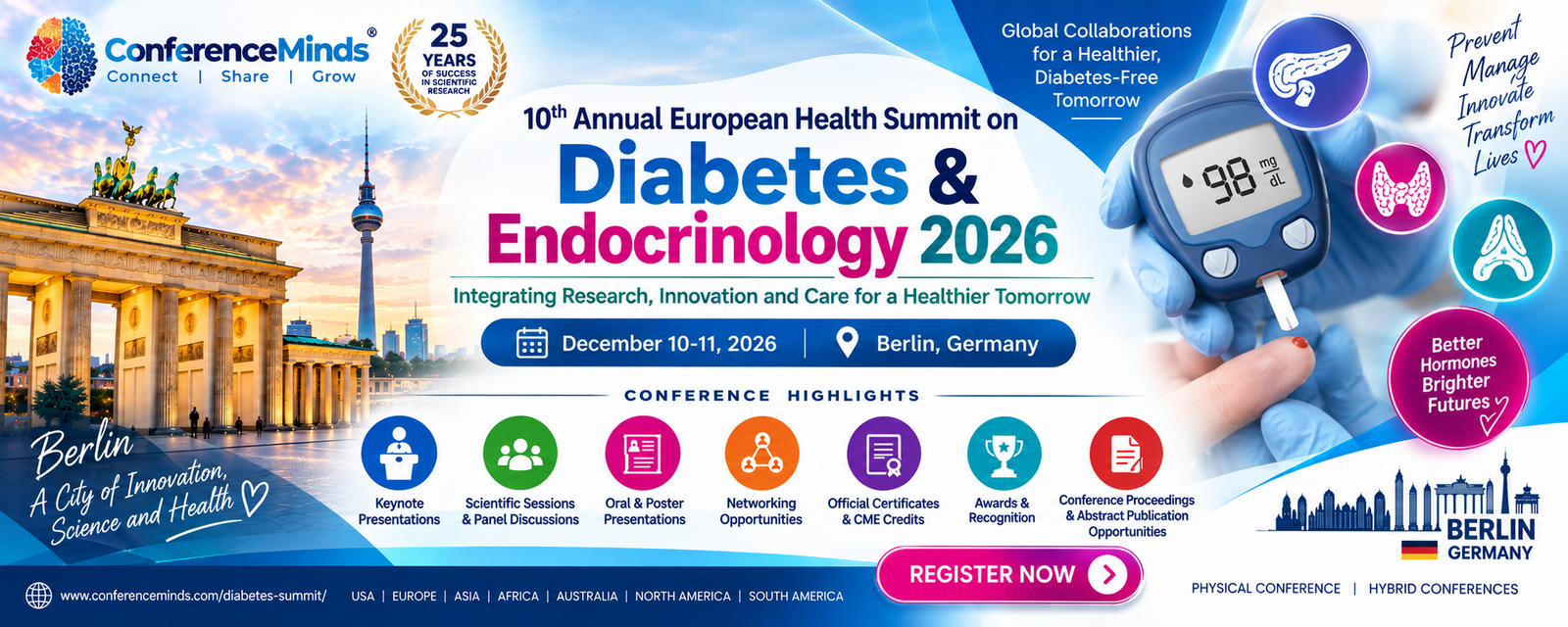
10th Annual European Health Summit
on
Diabetes & Endocrinology 2026
Event Date
December 10-11, 2026
Venue
Berlin, Germany
– Previous Conference Performers / Professionals From Around The Globe –










































Media Partners/Collaborator
A huge thanks to all our amazing partners. We couldn’t have a conference without you!










Sponsors/Exhibitors
A huge thanks to all our amazing partners. We couldn’t have a conference without you!
About the Conference
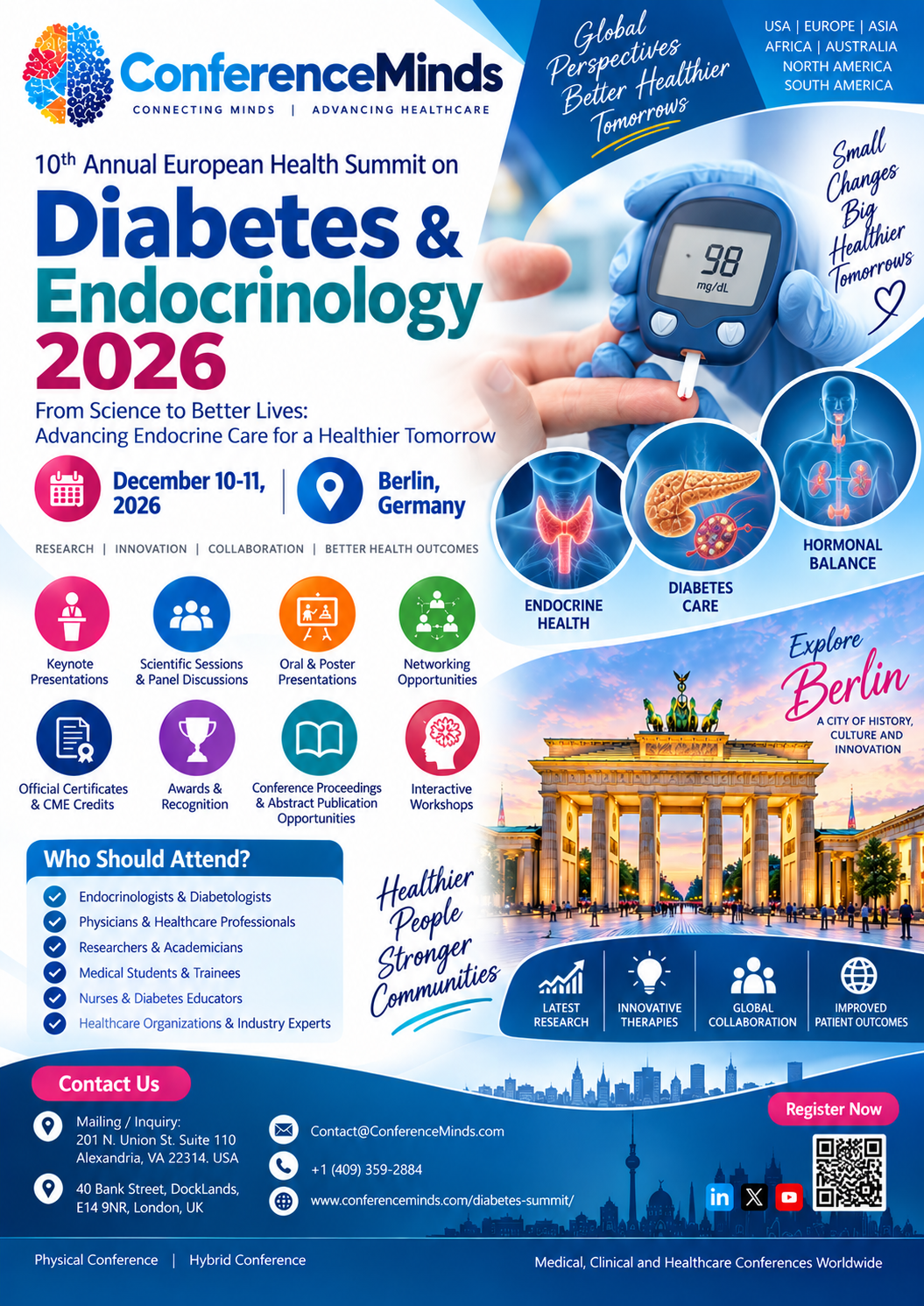
The 10th Annual European Health Summit on Diabetes & Endocrinology 2026 will be held on December 10–11, 2026, in Berlin, Germany, bringing together endocrinologists, diabetologists, physicians, researchers, healthcare professionals, nutrition specialists, educators, academics, and industry representatives from around the world.
The summit will provide a multidisciplinary platform for discussing recent advances in diabetes prevention and management, endocrinology, metabolic disorders, obesity, thyroid diseases, hormonal disorders, diabetic complications, precision medicine, and emerging therapeutic approaches. Participants will have opportunities to present original research, clinical studies, case reports, systematic reviews, and innovative approaches through keynote lectures, oral presentations, poster sessions, panel discussions, and interactive scientific sessions.
The conference is designed to encourage knowledge exchange between clinical and research communities while highlighting developments in diagnostics, therapeutics, digital health, medical technology, and personalized care. Particular attention will be given to improving long-term disease management, reducing complications, and addressing the growing global burden of metabolic disorders.
Berlin provides an international setting for scientific networking and professional collaboration, with extensive conference infrastructure and transport connections. The city has more than 130 conference hotels and a broad range of facilities suitable for international scientific meetings.
Sessions & Tracks
1. Diabetes Mellitus: Current Concepts and Advances
Updates in the diagnosis, classification, prevention, and comprehensive management of Type 1, Type 2, and other forms of diabetes.
2. Type 1 Diabetes and Emerging Therapies
Advances in autoimmune diabetes, insulin delivery, glucose monitoring, immunotherapy, and emerging treatment strategies.
3. Type 2 Diabetes: Prevention and Management
Lifestyle intervention, pharmacological management, risk-factor modification, and contemporary approaches to achieving glycemic control.
4. Gestational Diabetes and Maternal Health
Screening, diagnosis, management, pregnancy outcomes, postpartum follow-up, and prevention of future metabolic disease.
5. Diabetes and Cardiovascular Complications
Cardiovascular risk assessment and strategies for reducing myocardial infarction, stroke, heart failure, and vascular complications in diabetes.
6. Diabetic Kidney Disease
Early detection, renal protection, treatment strategies, and multidisciplinary approaches to managing diabetes-associated kidney disease.
7. Diabetic Neuropathy and Foot Complications
Diagnosis and management of peripheral neuropathy, diabetic foot ulcers, infection prevention, wound care, and limb preservation.
8. Continuous Glucose Monitoring and Digital Diabetes Care
The role of CGM, connected devices, mobile applications, telemedicine, and digital platforms in modern diabetes management.
9. Insulin Therapy and Advanced Drug Delivery
Modern insulin formulations, smart insulin delivery, pumps, automated systems, and innovations in drug-delivery technologies.
10. Obesity, Metabolism and Diabetes
The relationship between obesity and metabolic disease, including lifestyle interventions, pharmacotherapy, metabolic risk reduction, and long-term management.
11. Endocrine Disorders and Hormonal Regulation
Recent developments in the diagnosis and treatment of disorders involving endocrine glands and hormonal pathways.
12. Thyroid Disorders
Advances in hypothyroidism, hyperthyroidism, thyroid nodules, thyroid cancer, autoimmune thyroid disease, and thyroid function testing.
13. Adrenal and Pituitary Disorders
Clinical approaches to Cushing syndrome, adrenal insufficiency, pheochromocytoma, pituitary tumors, and hormone deficiencies.
14. Osteoporosis and Endocrine Bone Disorders
Hormonal influences on bone health, osteoporosis prevention, fracture risk assessment, and emerging therapeutic strategies.
15. Pediatric Diabetes and Endocrinology
Diagnosis and management of diabetes, growth disorders, puberty abnormalities, thyroid disease, and other endocrine conditions in children.
16. Pediatric Obesity and Metabolic Health
Childhood obesity, insulin resistance, metabolic syndrome, lifestyle intervention, and prevention of early-onset metabolic disease.
17. Endocrine Hypertension
Evaluation and management of hypertension associated with endocrine conditions, including primary aldosteronism and adrenal disorders.
18. Reproductive Endocrinology
Hormonal regulation of fertility, polycystic ovary syndrome, reproductive disorders, and endocrine factors affecting reproductive health.
19. Polycystic Ovary Syndrome (PCOS)
Current approaches to diagnosis and management of PCOS, including metabolic abnormalities, reproductive health, obesity, and insulin resistance.
20. Diabetes in Older Adults
Individualized treatment, hypoglycemia prevention, comorbidity management, and quality-of-life considerations in older patients with diabetes.
21. Precision Medicine in Diabetes & Endocrinology
Biomarkers, genetics, patient stratification, personalized treatment, and data-driven approaches to endocrine and metabolic diseases.
22. Artificial Intelligence and Endocrine Healthcare
Applications of AI, machine learning, predictive analytics, and clinical decision-support technologies in diabetes and endocrinology.
23. Nutrition, Lifestyle and Metabolic Health
Evidence-based nutrition, physical activity, behavioral interventions, weight management, and sustainable lifestyle strategies.
24. New Drugs and Therapeutic Innovations
Emerging medications, novel molecular targets, combination therapies, and developments in endocrine and metabolic therapeutics.
25. Future Directions in Diabetes & Endocrinology
Interactive discussion of emerging research, unresolved clinical challenges, innovative technologies, and future directions for endocrine healthcare.
Market Analysis
The diabetes and endocrinology sector continues to represent a major area of activity within the global healthcare ecosystem. Increasing prevalence of diabetes, obesity, metabolic syndrome, thyroid disorders, and other endocrine conditions is creating sustained demand for improved diagnostics, medicines, monitoring technologies, and long-term disease-management solutions.
The market is increasingly moving beyond conventional glucose-lowering treatment toward integrated management of cardiovascular, renal, neurological, and metabolic risks. Technologies such as continuous glucose monitoring, connected insulin-delivery systems, digital health platforms, remote patient monitoring, artificial intelligence, and data-driven clinical decision support are contributing to changes in how patients are monitored and treated.
The pharmaceutical segment is also experiencing significant innovation, particularly in therapies targeting glucose regulation, obesity, cardiovascular risk, and metabolic disease. At the same time, healthcare systems are placing greater emphasis on prevention, early diagnosis, personalized treatment, and reduction of diabetes-related complications.
Berlin provides a relevant European environment for scientific and commercial exchange. According to the Berlin-Brandenburg statistics office, the regional healthcare economy generated €22.35 billion in gross value added in Berlin in 2025, while the wider Berlin-Brandenburg healthcare economy grew by 2.6% in real terms compared with the previous year.
Against this background, the 2026 summit can facilitate interaction among clinicians, researchers, pharmaceutical and biotechnology professionals, medical-device companies, digital-health developers, academics, and healthcare organizations. The conference can support knowledge transfer, identification of emerging research areas, professional networking, and discussion of developments shaping the future of diabetes and endocrine healthcare.
Venue
Berlin, the capital of Germany, is a vibrant international city known for its rich history, cultural diversity, scientific excellence, and modern innovation. As one of Europe’s most influential cities, Berlin offers an ideal setting for international conferences, academic meetings, healthcare summits, and professional networking events.
The city combines historic landmarks with contemporary architecture, world-class research institutions, universities, hospitals, museums, and technology companies. Visitors can explore iconic attractions such as the Brandenburg Gate, Reichstag Building, Museum Island, Berlin Cathedral, and the Berlin Wall Memorial. Berlin’s diverse culinary scene, lively neighborhoods, parks, and cultural events also provide an enjoyable experience beyond conference activities.
Berlin is well connected to major European and international destinations through Berlin Brandenburg Airport and an extensive public transportation network of trains, trams, buses, and underground services. Its efficient infrastructure makes it convenient for delegates traveling from different countries.
For healthcare and scientific professionals, Berlin provides opportunities to connect with researchers, clinicians, academics, industry experts, and institutions from Germany and around the world. The city’s international atmosphere and strong academic and research environment make it a suitable destination for knowledge exchange, collaboration, and professional networking.
With its combination of history, innovation, culture, research, and international connectivity, Berlin offers conference participants both a productive professional environment and an enriching European travel experience.
– Tracks & Key Topics –
- Diabetes and Endocrinology 2026
- Diabetes Conference 2026
- Endocrinology Conference 2026
- Diabetes Conference Berlin 2026
- Endocrinology Conference Berlin 2026
- Diabetes Summit Germany
- Endocrinology Summit Germany
- European Diabetes Conference 2026
- European Endocrinology Summit 2026
- Diabetes Research Conference 2026
- Endocrinology Research Conference 2026
- International Diabetes Conference
- International Endocrinology Conference
- Diabetes Healthcare Summit
- Diabetes Medical Conference
- Endocrine Disorders Conference
- Diabetes Research 2026
- Endocrinology Research 2026
- Diabetes Treatment Conference
- Endocrine Disease Conference
- Type 1 Diabetes Conference
- Type 2 Diabetes Conference
- Diabetes Mellitus Conference
- Obesity and Diabetes Conference
- Metabolic Disorders Conference
- Thyroid Disorders Conference
- Hormonal Disorders Conference
- Clinical Endocrinology Conference
- Pediatric Endocrinology Conference
- Reproductive Endocrinology Conference
- Neuroendocrinology Conference
- Adrenal Disorders Conference
- Pituitary Disorders Conference
- Endocrine Oncology Conference
- Diabetic Complications Conference
- Diabetes Management Conference
- Diabetes Prevention Conference
- Diabetes Technology Conference
- Continuous Glucose Monitoring Conference
- Insulin Therapy Conference
- Diabetes Innovation Summit
- Endocrine Research Summit
- Diabetes Healthcare Congress
- Endocrinology Healthcare Congress
- Medical Conference Berlin
- Healthcare Conference Germany
- Medical Summit Berlin
- European Healthcare Summit
- International Healthcare Summit
- Healthcare Professionals Conference
- Medical Researchers Conference
- Clinical Research Conference
- Biomedical Research Conference
- Diabetes Experts Conference
- Endocrinology Experts Conference
- Diabetologists Conference
- Endocrinologists Conference
- Physicians Diabetes Conference
- Healthcare Professionals Berlin
- Medical Professionals Germany
- Scientific Conference Berlin
- Scientific Summit Germany
- Diabetes Education Conference
- Endocrinology Education Conference
- Diabetes Clinical Trials
- Endocrinology Clinical Trials
- Diabetes Diagnostics Conference
- Endocrine Diagnostics Conference
- Diabetes Therapeutics Conference
- Endocrine Therapeutics Conference
- Precision Diabetes Medicine
- Personalized Diabetes Care
- Diabetes Genetics Conference
- Diabetes Immunology Conference
- Diabetes Nutrition Conference
- Diabetes Lifestyle Management
- Cardiometabolic Health Conference
- Metabolic Health Summit
- Diabetes and Obesity Summit
- Insulin Resistance Conference
- Metabolic Syndrome Conference
- Gestational Diabetes Conference
- Diabetes in Pregnancy Conference
- Diabetic Neuropathy Conference
- Diabetic Retinopathy Conference
- Diabetic Kidney Disease Conference
- Cardiovascular Diabetes Conference
- Diabetes Complications Research
- Emerging Diabetes Therapies
- Advances in Endocrinology
- Advances in Diabetes Research
- Future of Diabetes Care
- Innovations in Endocrinology
- Diabetes Clinical Practice
- Endocrine Clinical Practice
- Diabetes and Hormone Research
- Diabetes Conference Europe
- Endocrinology Conference Europe
- Berlin Diabetes Summit December 2026
- 10th Annual European Health Summit on Diabetes & Endocrinology